It would be disingenuous of me to provide you with a Top 10 list. Getting past my lingering doubts about numbered lists, I don't think I've listened to most of this year's releases enough times to really get a sense of them. Having said that, I can still make some recommendations. Here are the things that did manage to bend my ear in the last 365 or so days.
Albums:
There weren't that many complete albums that held my interest, to be honest. Which could be due to my not paying attention, or maybe there just wasn't anything that really hit me right. There are albums I still want to talk about, though. A few I loved. A few were great. And a few I'm still not sure about, but I feel compelled to discuss.
 Lykke Li's Wounded Rhymes was one of the two albums I really fell in love with this year. I still haven't listened to Youth Novels, her previous album, nearly enough, but that's largely because it always sounded a bit empty to me. Musically, it created the skeleton, and didn't put on the flesh. There's nothing wrong with that, of course, but on her second album, Li elected to go big or go home. The album opens with "Youth Knows No Pain," as massive as opening tracks get. It's more than that; for this album, it's a statement of intent. In her writing, she creates the same corners as her last album, but here she fills them in. Some will walk away feeling like she stuffed them to the point of bursting. It helps, I think, that her singing is so restrained. Like her Nordic sister Annie, she turns her lack of emoting (to be fair, she does a great sad) into a strength. These tracks with a voice eager to share would be overwrought and too much. But Li's lyrics need something to drive them home, and, for her, it's the marvelously detailed music going on all around her. If you get the chance, pick up the actual single for "Get Some". The non-album b-side, "Paris Blue," is intoxicating in the right mood.
 Alison Krauss & Union Station were not a band I had put high up on my list of expectations for the year, but I loved Paper Airplane as much, if not more, than anything else that came out in 2011. I listened to it almost every night in June, and it's easy to see why. The title track is my favorite piece of songwriting from the last year. The cover of "Dimming of the Day" is elegant, understated, and the perfect vehicle for Krauss' crystalline voice. "On the Outside Looking In" gives Dan "Foggy Bottom Boys" Tyminski a powerhouse of a bluegrass number. And throughout the album, you are reminded of what it's like to listen to people who can really play their instruments. There aren't many bands so fine-tuned at playing together as this lot. "Paper Airplane" along is a masterclass in handling dynamics and feel. And what's truly terrifying is that they make the whole thing sound effortless.
 I'm happy to admit that I jumped on the Elbow bandwagon when most people did, around the release of 2008's The Seldom Seen Kid. In that time, I've really only listened to their first album, Asleep in the Back, and their latest, Build a Rocket Boys!. They are a band that requires time, under the best of circumstances, but they reward it fully; every time I listen to one of these three albums, I like it just a little bit more. Guy Garvey writes lyrics perfectly pitched between the every-day and the grand; He's Springsteen if Springsteen didn't sometimes leave me with the uneasy aftertaste of pandering. On the music front, as with all of their releases, this is a beautiful, patient album, full moments of intense quiet and cathartic release. It makes you wonder why more bands don't take advantage of both the "loud" and "quiet" opportunities music can afford. Probably because it's so damn difficult. Elbow used to be pegged as Radiohead/Coldplay also-rans. That has always been unfair. Radiohead are far afield in their own world. Coldplay are one of the biggest bands in the world. Elbow, meanwhile, have once again quietly made the argument that they are the best.
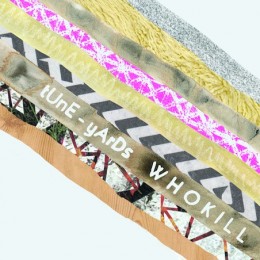 It's an aphorism at this point that there's nothing original left to do in music. In the broadest sense, that is likely true. But I firmly believe that, working in specifics, there will always be something new to do. And lo tUnE-yArDs' w h o k i l l, an engrossing take on what popular music can be. The rhythms are always somehow jilted, but the music moves seamlessly between melodic and dissonant, between the angularly beautific ("Wolly Wolly Gong") to the riotous ("Gangsta") to the frustrated ("My Country"). As far as replay value is concerned, I am drawn to words more than music, which is why I will always rate The National above this, and Randy Newman above everything else, but the music gets you in the door in the first place. And this is some of the best music you will hear. If you like it a little weird.
 It's likely this will become known as the Difficult Radiohead album, a title that seems to get perpetually back-shifted with each new release since it was first claimed by either Kid A or Amnesiac, depending on whom you ask. For my money, the difficult one is still Pablo Honey, but that's a cheap shot. The King of Limbs is definitely the low-key Radiohead album, which is both to its credit and detriment. The upshot is that it makes the outward statement of appearing calm while feeling anything but, and that's not easy to pull off. The downside? You have to pay it much more mind than previous releases, and I'm still not positive it rewards the effort. But I keep coming back to it, and I've not been the sort who would blindly follow a band anywhere for at least the last year and a half. The first half is where my uncertainty lies. But that half is texture. The second half, the songs, is hauntingly beautiful. And if none of it is knew, well, neither was anything on Hail to the Thief. I'll still get excited about the next one.
 I want to spend more time with Bad as Me, but I want to spend more time with Tom Waits albums in general, so that's hardly surprising. It's harder and has more drive than what he's done before. There's no "Misery's the River of the World", in sense of arrangements moreso than tone. He takes a (modest) step away from the mad carnival director angle, and while I've yet to tire of that take, it's probably the right time. "Bad as Me" is the most immediately engaging song he's written. Everything before that and after doesn't quite stick in the mind, at least not yet; but, as I said, I'd like a
while longer with it.

 At long last, it is here. 40-odd years of waiting have seen the original tapes for the infamous Smile Sessions come out in an official release. Brian Wilson's final days as an uncontested genius on display for all the world to see. What separates it from the 2004 release of SMiLE, recorded by Brian Wilson and a few magic fairies? Well, for one, this one's actually sung by the Beach Boys. The first second of the album makes it abundantly clear as to why that matters. While the "Our Prayer" on 2004's album was beautiful, this one is transcendent. "Heroes and Villains" contains more twists and turns than most albums do. "Surfs Up" is haunting. Outside of that, I'm not so sure what I think. The music is often top-flight, but the lyrics, written by Van Dyke Parks, refuse to mean anything to me. Worse than that, they feel like they're striving for meaning. I don't mind meaningless prattle when it knows that's what it is. As for the extensive bonus material, Brian's solo demo of "Surfs Up" is my favorite thing here, including everything from the album proper.
 I seem to be in the minority on Bon Iver, Bon Iver. I don't like it for reasons entirely unrelated to the embracing of soft rock. I've listened to it seven or eight times, in a multitude of settings and mindsets, and I just don't like it. I don't like how it sounds, I don't like how it's mixed. Some of it is beautiful, and Justin Vernon's voice remains an incredible instrument, but I just don't like it. It's too busy, I guess. I'm coming to piece with it. Everyone else can enjoy it, though. Don't stop on my account.
Another disappointment, ultimately, was Brad Paisley's new album, This Is Country Music. Unlike his still-masterful American Saturday Night, after a few spins, the new one smelled suspiciously like pandering. Which, too be fair, may have been an attempt to apologize for recommending on his last album that country music embrace multiculturalism. A final album note, I wish I had spent more time with Laura Marling's A Creature I Don't Know. She remains truly impressive.


