Showing posts with label 2009. Show all posts

Wednesday, November 25, 2009

American Saturday Night

Fact of the matter is, most of us write off country. This is not entirely our fault, collectively; There are two kinds of country, and one of them really, really sucks. The kind that sucks, "country," is the sort that tends to dominate the airwaves today. It's bland pop with a twang and lyrics that not only aim, but pander directly to, as much as I hate to bring politics into this, "Real America." The music is boring, and the lyrics are "folksy" in that patronizing sort of way. But I've been told I just don't understand the concept of easy entertainment, so maybe this is my shortfall.

At any rate, the good kind of Country, "Country" (with a capital "C," as opposed to the lower-case), is Johnny Cash, Willy Nelson, and Hank Williams. I refer to this, with the wonderful sense of superiority you can only get from a condescending maxim, as "Real Country." What separates Country from country? Well, there are a lot of things. There's a genuine element in Country which is sorely missing in country. And country sounds like someone took a belt sander to Country, removing all the interesting bits that gave it a feeling all its own. They, and by "They" I suppose I mean "The Country Man" or some equally ambiguous, omnipotent bastard, made it really boring.

The future of "Country" is looking pretty bleak, really. Which brings me to an exception to the rule.

My parents listen to country. They don't enjoy Country, though both will lie to you and say they do. The point is I spent a lot of time in the car with them during high school, and most of the music was less than enjoyable. I started grabbing onto certain songs I could find a thrill in. This was during my musical awakening, of course, and anything I could grasp, to make the ride less torturous, was appreciated. There was "Friends in Low Places," which is just a great song, no matter your tastes. There was a nice cover of "Here Comes My Baby" by, uh... that band... yeah. But there was also "I'm Gonna Miss Her." It started simply enough, and, being fair, it started with a roll of my eyes. It opens slow, a man discussing his proclivity for fishing, and his wife's disapproval of said fishing. She meets him at the door, and gives him an ultimatum; you go fishing today, and I'm leaving. I listened to all of this with the withdrawn disdain only high schoolers seem capable of mustering (the rest of us have learned it's really not worth all the effort). But then the song did something unexpected.

The tempo picked up, and Brad Paisley, as that was his name, declared, "Well... I'm gonna miss her." It's such an inspired moment, so well-realised, so without artifice, that you smile. I smiled. Yes, I broke my condescension, my ever-important sense of superiority, and smiled. I even enjoyed it. So "I'm Gonna Miss Her" joined my list of exceptions to the rule, those country songs which I could enjoy. (For the record, I consider "Friends in Low Places" to be Country)

I started keeping an ear out for more Brad Paisley. Over the ensuing months, I started noticing not just that his songs were funny and had a personality, but that his guitar was on fire, seemingly as a regular condition. This is a man I would rank in the Top 100 guitar players going today, with a strong, strong eye on my Top 20 faves, all time. He's that good. And that subtle, too. These are country songs, after all. So there are solos, but they are short. It's his lead work during the verses that really impresses. Limber without being showy.

This year, Brad Paisley released his seventh album, American Saturday Night. The reviews for it were splendid, and so I decided to venture forth and acquire a copy of a country album. This is new territory for all of us, I'm sure. Before I continue, I should note, that this album is brilliant, and you should buy it. Now.

One of the things Nashville albums are known for, to the extent that it has to be accounted for when reviewing a country album, is filler. A typical Nashville record has four or five singles, and the rest is detritus, used to fill the space. This album doesn't have any of that. Every track here, and I never say this, could be a single in the right context. A few are too slow, too subtle for that to happen, but they could be.

The songs here manage to be clever and heartfelt. They're original while staying familiar, which is a high compliment for country. Remember, this is meant to be enjoyed. It's not Animal Collective; you aren't supposed to work at it. It is simply meant to be. And it is. The melodies will stick in your head, and so will the lyrics. Is it schmaltzy? Of course, but in just the right dosing. "Anything Like Me" is about Paisley's first son, saying "It's safe to say that,/ I'll get my payback,/ if he's anything like me." At the moment, it's my favourite song on the album. Paisley's greatest strength is his honesty; "The years are gonna fly by./ I already dread the day,/ he's gonna hug his momma, he's gonna shake my hand, he's gonna act like he can't wait to leave./ But as he drives out,/ he'll cry his eyes out,/ if he's anything like me." Say what you want, but not only is it enjoyable, it's affecting; it made me feel fuzzy inside. The only other album to do that this year? Merriweather Post Pavillion, by Animal Collective. I just blew your mind.

So here we have an album that's hits, and only hits; this could have been released as a best-of, and I'd have believed it. And here we have a formidable songwriter operating at what I can only assume is the peaks of his powers. And here we have a backing band in peak shape, sounding like their having fun! Weird!

Brad Paisley makes country. He does. I can't pretend he doesn't. Yet, yet, his music, it's clever, it's original, it's genuine, it's touching, it's fun, for fuck's sake! And it has a bit of a honky tonk, swingin' personality to it, which makes it musically interesting. So maybe it's Country after all, and maybe the future isn't looking so bad as far as that goes.

Wednesday, October 28, 2009

I've seen Men In Black maybe five times in my life. The first time I saw it, when it was in theaters, I thought it was great. The second time I saw it, I didn't like it that much. The third time, I thought it was great. The fourth time... etc. You may see a pattern developing.

Ignore the Ignorant is like Men In Black, but with extra Johnny Marr for flavor. Yes, The Cribs have been joined this time around by the former Smith, Pretender, Modest Mouser, Electronic(er?), none other than Johnny Marr. It's almost easier to list the people he hasn't worked with, to be honest. Come to think of it, he's been on every Pet Shop Boy since the mid-nineties, as well. But I'm getting off the point.

Ignore the Ignorant is, I suppose, good. The first time, I loved it. The second time, I thought it was thoroughly uninspired. The third? Well, it seems to be leveling out at "good." "Decent," maybe. The point is, if you like a punk attitude with slightly less-punk wrappings, this is the album for you. It's a step up from where they've been, certainly. But I probably won't remember it within the next six months.

I will most certainly remember the newest from The Flaming Lips, Embryonic. You don't really have a choice, honestly. From the moment Wayne Coyne starts talking about the difference between us on "Convinced of the Hex," this is clearly not the same Flaming Lips we've been exposed to for the last decade; they've cleaned up their act by getting really, really messy, and it's brilliant. It's haphazard, certainly, and overwhelming the first time, but once you sort it out, it's a great trip. Getting in a room and jamming it out suits these boys quite well. Not, by any means, for everyone, but if it were, it wouldn't be nearly as interesting.

Saturday, October 17, 2009

Pure Pop for Now People

NOTE: The grading system has been eradicated. I began to feel it was too arbitrary, and when I was spending five minutes sitting at my keyboard deciding between a B- and a B, I knew it was a silly pursuit. Just read the reviews. They should give you the idea.

Thank you, patient readers, for waiting for me for so long. I apologize, it's been three weeks since my last post, but I have a pair of Power-Pop reviews, and this will be followed up in the coming days by reviews of the latest from The Flaming Lips, The Cribs, and Raekwon. Yes, that Raekwon.

My Old, Familiar Friend
(2009)
Brendan Benson

Brendan Benson, for those in the know (and who isn't?), is the other leader of Jack White's Raconteurs project. He used to be, at any rate, before White did that thing he inevitably does where he takes control. I'm not saying it's a bad thing, but it's a habit worth noting. At any rate, Benson is responsible for "Steady As She Goes," the best moment in the Raconteurs' collected output, and he was behind much of the first album. His is a very pure pop style; this is a man who listens to a lot of Big Star. The early Big Star, that is. Or, if he does listen to Third/Sister Lovers, he doesn't let it show.

At any rate, this is perky, perky, perky stuff. Emphasis on that last "perky." Opener "A Whole Lot Better" is a barnstormer of a single. It has the instant familiarity of a great single, sounding like it came out sometime around, oh, 1976. Yeah, that sounds about right. It also, as a perk, features a legitimately wonderful, simple lyric; "I change my mind every time that the wind blows," he sings with such enthusiasm that you can't help but think that may not be such a bad thing. It's on the radio from time to time, and you, yes, you, should check it out.

Unfortunately, for me at least, the album goes downhill from there. Not because it fails in its mission; far from it. I have a love-hate relationship with this kind of pop; the same influences that propel Benson forward are also responsible for Spoon, but Spoon had the sense to listen to some Pixies records once in a while, which keeps things, erm, grimy. It's too Pure, this pop is, which isn't really the problem; Elvis Costello's "Oliver's Army" is a Pop record, no bones about it, but Costello included weird harmonies, and wasn't afraid to use "nigger" in a sentence. Benson would probably shrivel into a ball, which is to say his lyrics don't make up for the sugar. This is a problem I will undoubtedly be alone in having, as is often the case. A very good Pop record, then, but not something I'll listen to much. Well, "A Whole Lot Better" may prove an exception...

The Boy Who Knew Too Much
(2009)
Mika

Let's be clear, "Grace Kelly," Mika's debut single from, what, 2007?, is brilliant. If you're its audience, it fills you with energy, enthusiasm, glee, vim and vigor, and if you're not its audience, it must just annoy the piss out of you. These are the things Great Pop is supposed to. Well, Great Pop which is aware of its existence as Great Pop is supposed to, anyway. This is why Coldplay are brilliant at what they do; Mika, Coldplay, U2, and Queen are all of a similar vein. Keep in mind, Mika is definitively the least deserving of that company, I'm not putting these people in tiers. I'm simply referring to the particular race they run; music written for the masses, not for the writer. There's nothing wrong with this, in principle. "Bohemian Rhapsody" is God coming through your speakers.

I bring up Queen because Mika and Freddy Mercury were cut from the same overtly melodramatic clothe, and Mika doesn't hide it. This is mostly because he finds the thought comforting, and a sort of Manifest Destiny. At any rate, his songs are Pop to the point where even I cringe. Listening to Mika is a lot like listening to an entire ELO album; when you're done, your brain kinda hurts, even though you're pretty sure you had a good time, and you think you want to do it again, but you don't know why. Each Mika album contains one ringer, though, and if his first had "Grace Kelly," The Boy Who Knew Too Much has "Rain," which is just Euro-Disco Pop, but better. It's all minor-tones, with whirling synths and a pulsing back beat which will get your feet moving whether you want it to or not.

Much like Mr. Benson, the album is immaculate in its construction, and every track is a technical ringer. Whereas Benson aims for guitar hooks which could land a whale, Mika uses everything, and there isn't an aspect of his songs which couldn't qualify as a hook; it depends on how you feel about hooks. I, for one, am cynical that way. Pure Pop is the hardest to pull off; you have to make it tricky while allowing everyone to think they could do it themselves. Both boys succeed wildly at that.

Friday, October 2, 2009

There is a stack of CDs sitting on my desk. I am falling behind. Thanks to work and academia, my rate of musical, literary, and cinematic consumption has dive-bombed into the basement. It is not a coincidence that my posts for this blog have dropped off as well, but beyond that, most of what I've listened to lately has failed to inspire. Here are two higher-profile albums I've listened to that didn't seem inclined towards a full-length review, and a book I know none of you will read, but I'm inclined to recommend anyway.

The new album by The Dead Weather, better known as Jack White's most recent project, goes by the ominous moniker of Horehound. Great name, but I'm not so sure about the album. It's more unusual than it is good or bad, which for some is a great thing. For me, that means it's alright. I don't typically appreciate weird for the sake of weird. It's a throwback to lo-fi sixties garage groups, combined with elements of straight-forward rock for which White is known, and while it succeeds spectacularly in that capacity, that's not a sound I necessarily needed back. So it could go either way for you, really. (Grade: B-)

The latest from Muse, The Resistance, is quite the disappointment. I enjoy not just the music of Muse, but their attitude in pulling it off. They take Over-the-Top to a whole new level, and firmly have their tongue-in-cheek while doing so. I love Absolution and Black Holes and Revelations, their last two, both of which served to provide the audience with a sense of the absurd mixed in with killer singles. Muse seem to have taken a step sideways with this one, and possibly a few steps back. Is it more grandiose than before? Unquestionably. The music is filled with the flourishing accompaniments of a real orchestra, and songs like "United States of Eurasia" are inherently ridiculous, as one expects from these space cases. But the lyrics are urbane where they used to be negligible, and the music is bland in places where it used to surprise. Not their best, then. (Grade: C-)

In books, I've finally finished volume 1 of Tocqueville's Democracy in America. It may have been written just short of 200 years ago, but this in-depth look at the American system of government as it came into adulthood is fascinating, and well worth the time. A balanced critic and admirer, Tocqueville never comes across as one-sided, always giving air time to all pertinent perspectives. None of you will read it, I know, but it's really rather brilliant. (Grade: A)

Monday, September 7, 2009

(500) Days of Summer

(500) Days of Summer
(2009)
Directed by Marc Webb
Written by Scott Neustadter and Michael H. Weber
Starring Joseph Gordon-Levitt and Zooey Deschanel

The genre of Romantic Comedy, or "Romcom" as all the time-pressed youngsters call it these days, is something best compared to a well-worn pair of dress shoes; over time, they've worn in to a comfortable shape, you know what to expect when you put them on, and you rarely regret having put them on. This is not necessarily a complement. We're talking about leaving a movie simply not minding that you've just lost ninety minutes, as opposed to having found great value in them.

It is a great, great pleasure to see a movie that manages to do something new with those shoes. (500) Days of Summer is a romantic comedy, but it is a smart one, it is fresh, it is idiosyncratic without being fey. It is testament to director Marc Webb's abilities that this movie came across perfectly; the jokes rely on perfect timing to not seem twee.

Zooey Deschanel is pitch-perfect as the titular Summer; you will have a hard time not falling in love with her early on. Much has been made of Joseph Gordon-Levitt's evolution into one of the finest actors of his generation, and his performance here justifies everything you've heard; he's an actor who knows how to inhabit the emotion of the moment, without making a show of it. Towards the end of the film, there is a scene on a train where he manages to imbue more genuine emotion into a pause then most actors could get out of a monologue. Stunning.

The story manages to go places you don't quite expect, and, assisted by its non-chronological sequence of presentation, it keeps you engaged and interested, without ever managing to be cheap. I would be remiss if I did not mention the music selection, all of which is perfect; the soundtrack consists of Regina Spektor, The Smiths, Doves, Hall & Oates, and Feist, to name a few; all the song choices fit the story and the mood exquisitely. The music supervisor for this film, Andrea von Foerster, did a superb job; she earned her paycheck during an absolutely hilarious segment involving "You Make My Dreams" by Hall & Oates. I haven't laughed that hard in a movie theater in years.

In short, there's nothing about this movie I didn't like, and there are very few things about it I didn't love. You should do yourself a favour and see it; life will just plain feel better.

Grade: A

Tuesday, August 25, 2009

Ba! Humbug!

Humbug
(2009)
Arctic Monkeys

It is a strange relationship I have with this band, it really is. They never blow me away on record for more than a song or two; listening to all of 2007's Favourite Worst Nightmare leaves me feeling somehow underwhelmed, and the same goes for Whatever People Say I Am, That's What I'm Not. For a song or two, they get the job done, and they get it done well. But not, for my money, over the course of an album, and every now and then I find their song structures to be terribly twee. For every time I find "Fluorescent Adolescent" to be an enjoyable, summer-tinged romp, there is a time I find it to be just shy of the mark, erring to the side of grating. Ah, well.

Having said that, they blew me away when I saw them at the Riviera here in Chicago two years ago. I mean, really, they were staggeringly brilliant. Not much in the way of banter or charismatic stage presence, but they were as tight a live band as you'll ever hear. The point is, heading into this latest offering, their third, I'm still not wholly convinced I believe in these Arctic Monkeys as the next saviours of pop music.

The only song I've ever loved, unconditionally, to come from the pen of Alex Turner and company is "If You Found This It's Probably Too Late," a barnstormer that served as the intro to their Brianstorm EP. It promised dark, heavy things, a sound which I think suits this increasingly-less-than-merry band. There aren't many modern bands making heavy music you can sink your teeth into, and I'm not talking about music that pummels you, so much as music that simply feels heavy. Like Queens of the Stone Age. Which is appropriate enough, since QOtSA singer, guitarist and all-around mastermind Josh Homme serves as the producer here. I like his effect on the band. It bodes well. This set's a bit lacking in parts, but the direction they're aiming is one I like very much. And Matt Helder is an amazing drummer. Listen to it, it may ultimately prove essential. What's so promising here, though, that neither previous album has managed, is that, in listening to it from the beginning to the end, I find I am more fond of what I am hearing as it ends than I am of what I hear when it begins. That is a good sign.

Grade: B+

Friday, August 21, 2009

Ponyo

Ponyo
(2009)
Written and Directed by Hayao Miyazaki

I'll start by telling you, at point-blank, that the visuals alone are worth the cost of admission to see Ponyo, the latest film from Japanese master Hayao Miyazaki. The backgrounds are often rendered in an almost child-like manner, with crayons and loose shapes; it's stunning to see. The animation itself is perhaps the best of Miyazaki's career; if it's second to anything, it's second only to the visual splendour of Princess Mononoke, and that, without exaggeration, is one of the most beautiful movies in all of cinema, animated or otherwise. So, then, it looks damn purdy.

What of the story? As with every Miyazaki film, it requires from the audience a certain amount of patience; the world doesn't explain itself to you, so much as you come to terms with the idea that this film's reality works in such and such a way, and you might as well accept that. Each of Miyazaki's movies has required such an effort, if you can call it that, from the audience, and each has required it more than the last, but Howel's Moving Castle, Miyazaki's last picture and arguably one of his weakest, seems to have represented his more esoteric tendencies at their peaks. In short, less diffused wording, Ponyo is simply easier to follow, and easier to enjoy.

The story is sort of about a boy who finds a mermaid, and then they have an adventure together. That's an awful, awful misrepresentation, and it doesn't relate to you the charm, the humour, and the beauty at the core of it, but I don't do summaries, really, so I won't try. What you need to know going in is that this is as magical a story as Miyazaki has written, and it's the spiritual heir to his masterful My Neighbor Totoro, which is to say it is his second "children's" film. That is a comment meant not in a belittling sense; a young child is unlikely to find Nausicäa all that entertaining, and Spirited Away could even frighten them, but Ponyo is adorable enough, and colourful enough (Oh, sweet merciful Jesus, the colours), and relatable enough, with both main characters being five, that younger members of the studio audience will enjoy it just as much as the bigger ones. I should know; there were a number of young'ns at the show I went to, and, if the sounds they made were any indication, they loved it. One girl, in fact, very helpfully pointed out rather loudly that "Ponyo is tired." It, uh, it was funnier if you were there.

Miyazaki is a brilliant man, no question. He can bring out the magic in anything, and he knows well enough to let it flourish. After the relative misstep of Howel's Moving Castle, and the participatory requirements of Princess Mononoke and Spirited Away, Ponyo is as purely enjoyable a film as Miyazaki has ever made, and it takes all the best qualities of his canon- the magic, the humour, the beauty- and presents them in their simplest form. One of his best films, and that's no small accomplishment.

Grade: A+

Friday, August 14, 2009

Wilco (The Blog Post)

Wilco (The Album)
(2009)
Wilco

It's rewarding, to keep pushing at something until you "get it." I didn't get past "Wilco (The Song)" the first five or six times I attempted to listen to this album. There was something about it that didn't sit right. I couldn't tell you what it is, and now that it's gone, I thoroughly enjoy it, but something wasn't hitting me in the right spot. Having said that, this morning, I cracked it open again, and I was delighted.

I cannot claim to be, nor have I ever posited, that I am an expert on Wilco. Theirs is a brand of music which has always eluded me. I own Yankee Hotel Foxtrot, A Ghost is Born, and Sky Blue Sky, but I've never really enjoyed any of them beyond the superficial. Having said that, I am one of the only people I know of who enjoy- enjoy- the buzzing, clicking soundscape at the end of "Less Than You Think," so I don't find their work completely alien. One of the strong points of Wilco has always been that, for all their sonic experimentation, Jeff Tweedy has always kept the melodies very plain, in a good way. The frames of these songs are simple; it's the clothes that are damn fancy.

Wilco (The Album), opening with "Wilco (The Song)," and put out by the presumably recently-rechristened Wilco (The Band), is assured. That's probably the best way to describe it. They know what they're doing, and they do it. This is not to say they have reached the point of Knowing How to Make a Good Record. No, no, nothing like that. Wilco have always kept that part of the process interesting. But here, with this album, we get the sense that things have leveled off, and now Tweedy might actually be having fun. The opening song is meant as a lark, and it's a good one. Just remember, "Wilco, Wilco, Wilco's gonna love you baby."

It's a bit of a return to the alt-country from which all post-Foxtrot works have deviated. "I'll Fight" is almost an entirely "normal" alt-country ditty, which, again, isn't a bad thing. This is the Wilco album I'm most likely to pop back on again in a year or two. "You Never Know" is one of the best George Harrison songs George Harrison never wrote. That sliding guitar part screams out All Things Must Pass, something you don't get that much of anymore. It's a nice touchstone. Having said that, this doesn't reach the artistically daring heights of their earlier albums, and, it turns out, beneath the flashy exterior, Tweedy's much more normal than some would like to think.

Grade: B

Sunday, August 9, 2009

Fancy a Game of Cricket, Then?

The Duckworth Lewis Method
(2009)
The Duckworth Lewis Method

There has never, apparently, been an entire album dedicated to the sport of Cricket. A handful of songs, sure, but never an album. And this would seem simultaneously surprising and sensible; surprising, as cricket is a popular game around the world, and sensible, because, well, it's cricket. It doesn't exactly scream ROCK N' FUCKIN' ROLL at the top of its lungs.

Fortunately, there are people like Neil Hannon and Thomas Walsh, two Irish musicians with a strong affinity for cricket, and who are willing to share that fondness with the world. So, here we have The Duckworth Lewis Method, an album of chamber pop pastiches which pay homage to that most English of sports.

The album is named, for those wondering, after a complicated algorithm which is the accepted method for determining the winner of a match that is rained out. I looked it up, and it's a wonder anyone ever managed to come up with it. In most sports, you could just reschedule the game, but cricket matches go on for days, with breaks for lunch, and rescheduling a game is nearly imposible. Matches can go on for weeks, literally, and so it is no small miracle that this album never wears out its welcome. This is no small credit to Hannon, who was clearly in charge of the proceedings; you could be forgiven for mistaking this as a Divine Comedy album, the band Hannon fronts for his day job.

These tunes are fun. They are definitely pastiches, no question; there isn't anything new here. But it's all done so well, with such a sense of fun, that you can easily give yourself over and enjoy. What's critical to this album's success, outside of the music, is that Hannon and Walsh are fans not just of cricket, but of the lifestyle, that most English of ways, that it represents. The album eulogises a sport and a world that could be falling away for good. It doesn't say, to its credit, whether or not this is a bad thing, and it never tackles the point explicitly, but it is there, floating in the back of your mind, rapping gently on your thoughts.

Grade: B+

Wednesday, July 15, 2009

Harry Potter and the Half-Blood Prince

Harry Potter and the Half-Blood Prince
(2009)
Adapted by Steve Kloves
Directed by David Yates

There is a point where you have to decide if you're going to review a movie of a book as a fan of the book, or as a fan of movies. It is unfair, I think, to approach a film adaptation from the perspective of an ardent bibliophile. They are two very different mediums, and what works in one does not always work in the other. Because I feel the Potter films have been hindered by attempting to include too much from the books, while fans would argue they have not included enough, I look at this as a movie, not adapted from a source, but as its own creation.

There have been two constant sources of strength for the Harry Potter movies; the supporting cast, and the art direction. Filling out all the roles with great British character actors was a masterstroke that has kept the films nothing short of watchable, even in the weakest moments. As the students of Hogwarts have gained their sea legs, the adults have consistently delivered wondrous performances. That continues here, though Radcliffe and company are, fittingly, carrying greater loads. Fortunately, they are all very capable, if not exceedingly gifted, actors, and they do just fine.

The great triumph of this film is the art direction; the Potter films have never looked better. The memories Harry observes through the Pensieve look gorgeous, absolutely gorgeous. More impressive is how the art direction has changed, throughout the series, to reflect the darker moods. Hogwarts looked warm and inviting in the first film; it now seems a frightening, isolated place, a masterpiece of gothic construction that finally suggest a mood befitting its period. The scene where Belatrix Lestrange evicerates the Great Hall is astonishing, and I can't recommend the film enough, if only as eye candy.

The only problem I had with this film, and has been a worsening problem as the source material has grown in length, is the pacing. The final twenty minutes were rushed; when the Death Eaters invade Hogwarts and kill Dumbledo- oh, I'm sorry, I thought you knew already. That scene is rushed, and, when the identity of the titular Price is revealed, it passes by as a, "Oh, that's right, I forgot we were curious about that..." It leaves the impression that they disclosed his identity only because to not do so would be a major screenwriting gaffe. The run up is great, the movie navigates the tricks well, and then it just misses the landing. All in all, not bad, but I'm still waiting for an unquestionably great film in this series. They do keep getting better, so I wouldn't be surprised.

Grade: B

Wednesday, July 8, 2009

West Ryder Pamper Something Or Other

West Ryder Pauper Lunatic Asylum
(2009)
Kasabian

It is said that talent imitates, and genius steals. By that reckoning, Coldplay are smart, Art Brut are geniuses, and Kasabian are nothing short of fucking brilliant. This is only fitting, though; they are widely billed to be the heirs to Oasis, appointed by Noel himself, which is to say they come from a fine line of exceptional thieves. Now, of course, this is somewhat unfair, as there isn't a band worth their salt who've not stolen material, and that's such a grey term as it is, but a friend of mine put it best: "Kasabian sound like they listened to the same records as Oasis, then ran in a different direction."

Kasabian's last album, Empire, was the big break-through. I loved it at first, but it wore me down after a while, and sounded trite. The new one may or may not fair better, but I can say it seems somewhat improved. The boys don't sound as though they are trying to conquer the world, like they did last time. This is a more laid-back affair, and it suits them. They've always had a slight experimental edge to them, but it's always hard to pin down; you can tell they've done something unusual, but you'd be damned if you could say what it is. There's nothing earth-shattering to be found. Just competent lad-rock.

I must also applaud the greatest piece of pilfering they've managed yet, when the closing track, "Happiness," turns into "You Can't Always Get What You Want," choir and everything.

Grade: C+

Friday, July 3, 2009

Dark Night of the Soul

Danger Mouse and Sparklehorse Present: Dark Night of the Soul
(2009)
Danger Mouse & Sparklehorse

This project hasn't seen official release yet due to contractual issues. I don't find this entirely surprising; there are a lot of players here. Over the course of thirteen songs, we see guest spots by Wayne Coyne from Flaming Lips, Gruff Rhys from Super Furry Animals, Jason Lytle from Grandaddy, Julian Casablancas from The Strokes, Black Francis, Iggy Pop, James Mercer from The Shins, Nina Persson from The Cardigans and A Camp, Suzanna Vega, Vic Chesnutt, and director David Lynch. It's a disparate set, but they make it work.

It is a moody record, with a very apt title; there aren't a lot of tones here, with all the songs going for quiet, glitchy introspection. The ambiances have been well worked over, no question, as is typical of Danger Mouse. I'm a bit worried about him, though; he's done some great work with Damon Albarn, but it seems without such a strong personality to fight against him, he too easily falls into this sixties-pastiche. Consider that this doesn't sound so different from Beck's last album, Modern Guilt, also produced by Mr. Mouse, and you'll see what I'm talking about.

The songwriting isn't exceptional, but it does make excellent use of all the guests. They weren't brought in purely for the novelty of having some friends in to make a record. That's probably this album's saving grace; it's not an objectionable occurance, it's worth listening to on a quiet night when you don't have much else to do, and it has fleeting moments of greatness, but it's less than the sum of its considerable parts.

Grade: C

Monday, June 15, 2009

Art Brut Vs. Satan

Art Brut Vs. Satan
(2009)
Art Brut

I can't remember the last time an album made me laugh. I can think of some recent albums that have elicited wry chuckles, but no genuine laughter. Certainly not of an uncontrolled sort. The first time I listened to this album, I was at work, and I burst out in laughter during the song "DC Comics and Chocolate Milkshake," for reasons I won't reveal here. But it's wonderful. The whole album is clever. The lyrics are funny, but not in a detached way. In some ways, my appreciation for the emotions of the situations described are increased be Eddie Argos' refined sense of humour. The album ends with a song called "Mysterious Bruises," describing a night out that started with one Xanax, two Aspirin, and a drink that made him feel invincible. From an aural perspective, it's all post-punk-influenced angular guitars and upward tempos, with Argos using the same delivery throughout, a sort of shout. But it works. Musically, Art Brut are a one trick pony, but, my God, what a trick.

Grade: A-

Sunday, June 14, 2009

Actor
(2009)
St. Vincent

What an interesting year for women in pop this has been. I'm the first to admit my collection has an appalling under-representation of the fairer sex in its contents, but it thrills me that, so far, three of this year's strongest albums have all been the work of women. First, Lily Allen released the best strictly-pop album of the year with It's Not Me, It's You, which is still wonderful. Then, Yeah Yeah Yeahs released It's Blitz! Now, we have Actor, an album from an artist I have never heard of, St. Vincent. The first time I listened to this album, the musicality of it all escaped me, for reasons I don't know. The immediacy of the melody on opener "The Strangers" is so striking and wonderful that I can't understand how I missed it the first time through. It opens beautifully, with a strong melody and pretty underpinnings, only to have the whole thing ripped away to make room for a heavily distorted guitar. This is a pattern that the album will follow, with moments of beauty torn apart by moments of controlled chaos.

It takes a listen, apparently, but it's addicting. I listened to this album four times in a row the second time I listened to it, and it demanded more. No album has done that since The Good, The Bad, and the Queen came out three years ago, which, from me, is high praise. Actor is unlike anything I've ever listened to, at once beautiful while still challenging, and still operating in the broader umbrella of pop. Those who throw away the Pop umbrella lose my attention. Those who learn how to operate in their own corner of it tend to gain my greatest affections. St. Vincent is way out there on the fringe, but she knows exactly how to stay under cover. This may end up being the year's best album.

Grade: A

Sorry, Mr. Swift...

The Atlantic Ocean
(2009)
Richard Swift

Back in 2007, I read a lot about Richard Swift. He'd just released Dressed Up for the Letdown, a great little record. It was inventive, catchy, original, and followed the well-observed rules of song craft, and I mean the Tin Pan Alley and Brill Building kind, not this new-fangled Rock n' Roll the kids have been listening to. He flirted with mainstream success. He may have even touched it, but I don't think so... I seem to be the only person I've encountered since 2007 who's appreciated the perfection of "Kisses for the Misses," and that's a damn shame.

At any rate, he retreated from the almost limelight, released an odd album of instrumentals last year, and now returns with his newest effort proper, The Atlantic Ocean. Obscurity, it would seem, works for some people, particularly when it's the willful sort. Not that he wouldn't have been okay with fame, but you can hear the creative freedoms his anonymity brings him. This album builds on the forms of Dressed Up for the Letdown, but adds, well, funny noises. The songs are frosted with synth sounds, and it's spectacular. They would not have happened if Richard Swift were becoming a household name, no chance. And they are wondrous things. The opening moments of the title track are my favourite audiophilic indulgence for the year, and the entire album follows suit. There are songs that risk becoming irritating, but something about the way this most talented of individuals crafts songs keeps that from happening. I still don't understand why he isn't famous, but I'm grateful for it, and I hope that doesn't change any time soon.

Clearly a master craftsman who has learnt well the structures and works of Harry Nilsson and Macca, the only downside here is that most of it does not stay firmly in your head, fading from memory almost as quickly as it does from the ears. There is an unquestionably great, properly great album somewhere in this man, and I think it's going to come soon. In the meantime, I'll settle for this.

Grade:B+
Secret, Profane & Sugarcane
(2009)
Elvis Costello

I enjoy Elvis Costello, probably more than most, and probably more than I should. His musical wanderlust is something I aspire to, and hope to duplicate in my own time. This is his blue grass album, essentially. He's teamed up with T Bone Burnett for the first time since 1989's Spike, which was certainly a different affair than this. That was all about odd noises and pop production. This album won't get played on any but the most dedicated Roots Music stations. It feels as authentic as it sounds, thanks mostly to Burnett's production, and his black book. Emmy Lou Harris is one of a number of guests who make great appearances. Costello's voice continues to age well, which is always a plus. It's barely changed from the early days, but it's gained a lower register and a greater emotional resonance, both of which come in handy throughout this event. While it proves an absorbing enough listen if you set out to do nothing else while it's on, it never grabs your attention if you don't volunteer it. Neither a career high nor a career low, it works as a companion piece to last year's Momofuku: competent entries into an exemplary catalogue that reinforce the spine without really adding any muscle.

Grade: C+

Hombre Lobo: 12 Songs of Desire

Hombre Lobo: 12 Songs of Desire
(2009)
Eels

There is a conceit to Eels, and anyone who's listened to an album of their music will know what it is; Mark Everett only writes one song. If you stretch it, and I mean really stretch it, you could say he writes three. But one is all he needs. It can make an Eels marathon hard to stomach, and on occasion it makes an entire album hard to stomach, but it is a damn fine song, and at times it is uncommonly affecting. There's a reason an Eels song has appeared in each Shrek movie; they are emotive, affecting, and singer Everett has one of those voices, the ones with almost no technical range, but an emotional one you can't deny.

It's been four years since opus Blinking Lights and Other Revelations, and that was an album which had been in the works for something like a decade. Hombre Lobo is a lesser album in ambition, scope, size (Blinking Lights was a very full double-album), and execution, but that's not surprising. I don't think Everett's going to try to do better, only (relatively) different. Blinking Lights was a delicate album at times. This one isn't. It's more Eels taking a stab at garage rock, with some gentler numbers thrown in. While the whole album isn't stuffed with brilliance, I want to turn your attention to one song. "That Look You Gave That Guy" is as good as its title promises, and it illustrates all the strengths Eels have at their disposal.

It opens with a simple guitar progression, soothing without being utterly predictable. Everett's voice sounds, "I never thought that I could be so bold, to even say these thoughts aloud. I see you with your man, your eyes just shown, while he stands tall and walks proud. That look you gave you that guy, I wanna see, looking right at me." The lyrics are simple, and cut right to the heart of the song, the heart of the matter, the heart of Everett. If we've heard lyrics like, "I'm nothing like I'd like to be, I'm nothing much, I know it's true" from him before, and we have, they're still staggeringly effective. An Eels best of would be the same song 12 times, with the same mid-level tempo, and that same plaintative vocal, but it would be a wonderful, wonderful thing.

Grade: B

Thursday, May 28, 2009

Caught Up, For Now

The Spinning Top
(2009)
Graham Coxon

My love for blur is undying to the point that I will listen to every album any member puts out as a solo artist. Graham Coxon's previous two solo albums, Happiness in Magazines and Love Travels at Illegal Speeds, were power-pop affair, and both were unexpectedly good. Damon Albarn was almost always the songwriter for blur, so I wouldn't have put a lot of chips down on Graham. Neither of those albums are classics, but they're both quite enjoyable. The Spinning Top is a *sigh* concept album about a man's life, from birth to death. At any rate, it's quite folk; this is where Coxon lets out his fondness for Bert Jansch, among others. From time to time, it's gorgeous, but it's too often plodding. His guitar playing is never less than phenomenal, though, and if you didn't believe he was his generation's best before, you should listen to this. I believe the word that suits it best is "solid."
Grade: B-

Journal for Plague Lovers
(2009)
Manic Street Preachers

I've not listened much to this trio (or would that be quartet for this album?). Turns out, I wasn't missing much. The back story for this album is far more interesting than the product, as it makes use of lyrics left to the band by their former lyricist, who disappeared mysteriously in 1995. He gave the lyrics to their bassist in a notebook, with collages and whatnots, and the remaining members used them as guides for how to make the music sound. Those were some extremely generic collages. There is neither an exceptionally written song nor an exceptionally executed sound anywhere in this album. It's not bad, I suppose, but only for those who like their music neither clever nor challenging.
Grade: D+

Catching Up, Part 2

The Sound of the Universe
(2009)
Depeche Mode

Until I listened to "Fragile Tension," I had no idea how much of an influence Depeche Mode (I prefer my Depeche a La Mode, with ice cream) had on The Killers. Either that, or, The Killers are rubbing off on Depeche Mode, which would just be a strange, strange thing. The same old furrough is getting old, boys, though points for doing it with style for so long.
Grade: C

Kingdom of Rust
(2009)
Doves

When the biggest complaint I can file about an album is that most of its songs are merely infinitely listenable, that says something. Now, that's not meant to be poor rationale; it falls in the same general category as "This artist knows how to make a good record" (See "Born to Re-Run"), but is a less severe infraction. You can place Doves in the same general category as Elbow and Coldplay, which is to say bands that are Radiohead with a sense of humour, and a more obviously commercial sensibility. Not that that's a bad thing. I find Radiohead's wilful anti-consumerist approach (which is bullshit anyway, since no band has kept as keen an eye on staying commercial as Radiohead, albeit in their own way) to be tiresome. There is a lag halfway through this album, again a result of an age where albums are regularly three songs too long (Try it as an experiment at home, you'll find I'm right. Name the album made in the CD era, I'll show you the three songs that can be chopped off to make it stronger.) But the opening salvo, "Jetstream," "Kingdom of Rust," "The Outsiders," and "Winter Hill," is impossible to ignore, and it closes well. Cut out "The Greatest Denier," "Birds Flew Backwards," and "Spellbound," and this might have been the best album of the year. Ah, well. Maybe next time.
Grade: B

Yes
(2009)
Pet Shop Boys

I do love PSB. They are a special group, no question. I find their early albums a bit bland, but that was part of the point. You were meant to feel like you were trapped in suburbia with the kids they wrote so effectively about. Very, their best album, had nearly vibrant arrangements, and you can spot a Very track from a mile away, if you're even slightly aware of the PSB aesthetic. Neil Tennet is a favourite singer, with an erudite tenor and a tempured, withdrawn delivery. That they are in their fifties and still making music that's catchy and poppy without sacrificing intelligence is to be commended. Their knighthoods, rest assured, are fast-approaching. But I digress. Yes is not their best album, and it's not their best since Very, that would be Nightlife, but I know for a fact that "Love, Etc." and "Did You See Me Coming" (*wink*) are two of their better singles in ages. As for the rest? Like X&Y by Coldplay, this is an album that you remember enjoying less than you do when it's playing. I still haven't decided whether that's a good thing or not.

Grade: B+

Catch up, Part 1

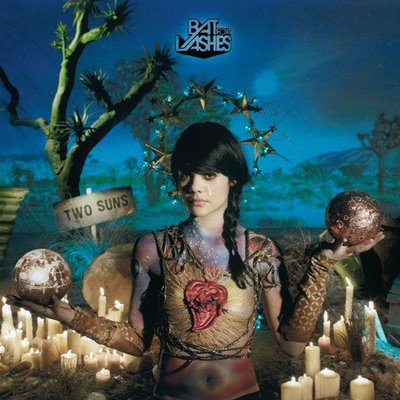
Two Suns
(2009)
Bats for Lashes

Opening track "Glass" is astounding, managing to be both propulsive and atmospheric, which is no small accomplishment. It's fair to say that describes the whole album, and that's unfortunate. The sound is so samey throughout that nothing develops its own identity, beyond that title track. The lyrics are nothing but empty brushstrokes to fill the canvas, which may well be the point, but her obfuscation isn't as effective as, say, Michael Stipe, or even Fur and Gold Bats for Lashes.
Grade: C

Together Through Life
(2009)
Bob Dylan

The trouble of evaluating Dylan on an even field is apparent; I feel a need to be perceived as "getting it" and a need to balance out all the faithful who will automatically give the album five stars. Fortunately, with Dylan, I long ago gave up the need to appear to "get it," and instead go with how I feel. Which works to his advantage here. Modern Times was a brilliant album, it was, and I've grown to appreciate it, but it was an intellectual exercise. It didn't feel like anything special at first. Fortunately for Bob, Together Through Life feels great. There's a swing. The songs are entertaining. If it's all a bit samey (noticing a trend?), it's a great, pastiche-like samey, one that reaches way back to the days when an accordion was a lead instrument. The lyrics are wry, predictable in the way where that's a compliment, and the voice is becoming a better instrument as he ages. His best? No. Calm down. But not so f
ar from it that I feel the need to balance.
Grade: B

Leftrightleftrightleft
(2009)
Coldplay

A free live album is cause for rejoicing, whether it's good or not. That this is exceptional, capturing the band in incredible form, on top of the world, is a plus. That it fills me with raging depression over having not seen them on this tour is actually a compliment. Is it essential? No. But bands shouldn't sound this studio-like live. Is it anything to write home about? Not really. Are you going to be converted if you weren't already? Of course not. Coldplay don't convert people. If you're a fan, will you love it? Yes.
Grade: A-